Widum in Jenesien

via Paese

39050

San Genesio, Italien


Besitzer

Curia di S. Genesio

Bewohner

Curia di S. Genesio

Ansprechpartner

arch. Manuel Benedikter
Arch. Manuel Benedikter eGmbH | Srls
mb@benedikter.biz

Other Information

Visits
upon prior request

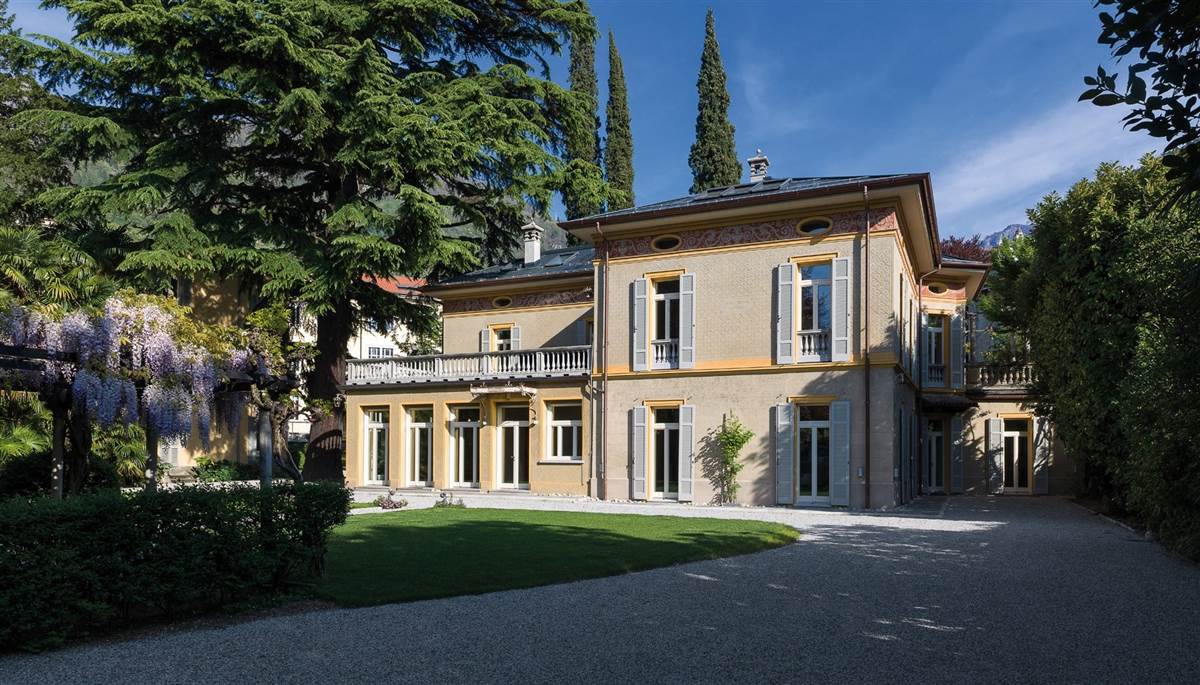
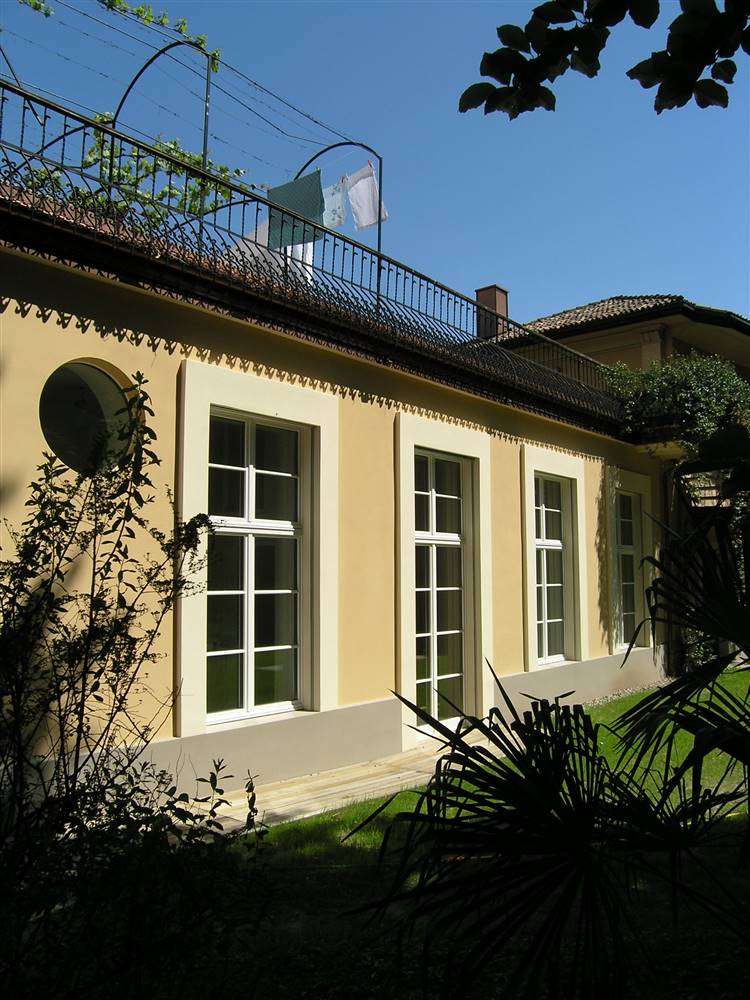
Widum, external view 1, ©ManuelMosquera
Energieeffizienz Primärenergie:
73 kWh/m2.y

Klimazone F

Höhe über dem Meer 1000 m ü.d.M.

Heizgradtage 4073

Kühlgradtage 0

Unterschutzstellung denkmalgeschützt

Ensembleschutz:
Ja

Stufe der Unterschutzstellung:
Historical City Center

Baualter vor 1600

Letzte Sanierung:
2021

Gebäudenutzung Residential (urban)

Gebäudebelegung:
Permanently occupied

Gebäudefläche Nettogeschossfläche [m²]: 699,0

Gebäudetyp:
Detached house

Anzahl der Stockwerke:
4

Keller ja/nein:
Ja

Anzahl der beheizten Stockwerke:
0

Bruttogeschossfläche [m²]:
0,0

Thermische Gebäudehülle [m²]:
1228,0

Volumen [m³]:
2510,0

NGF Berechnungsmethode:
Useful area (it)

Bauart
Stone masonry wall

Außen:
Rendered

Innen:
Plastered (on hard)

Dach:
Pitched roof
+ MEHR - WENIGER
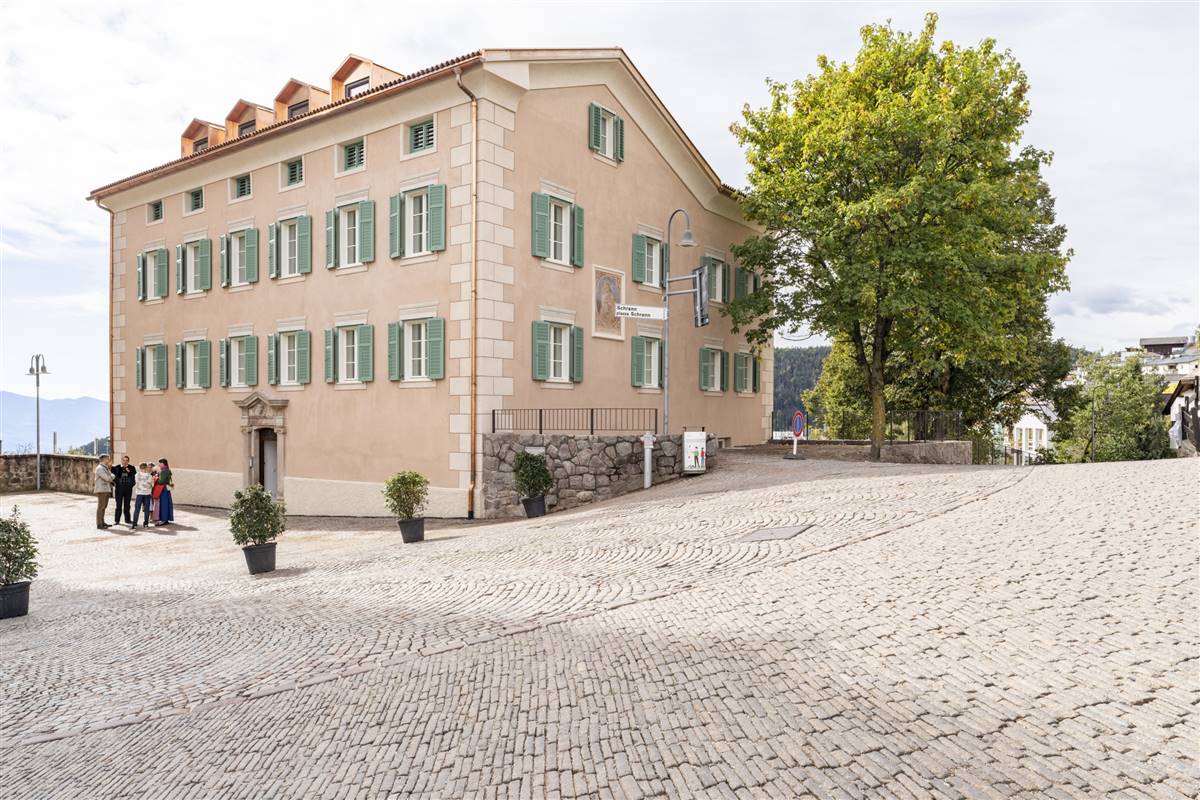
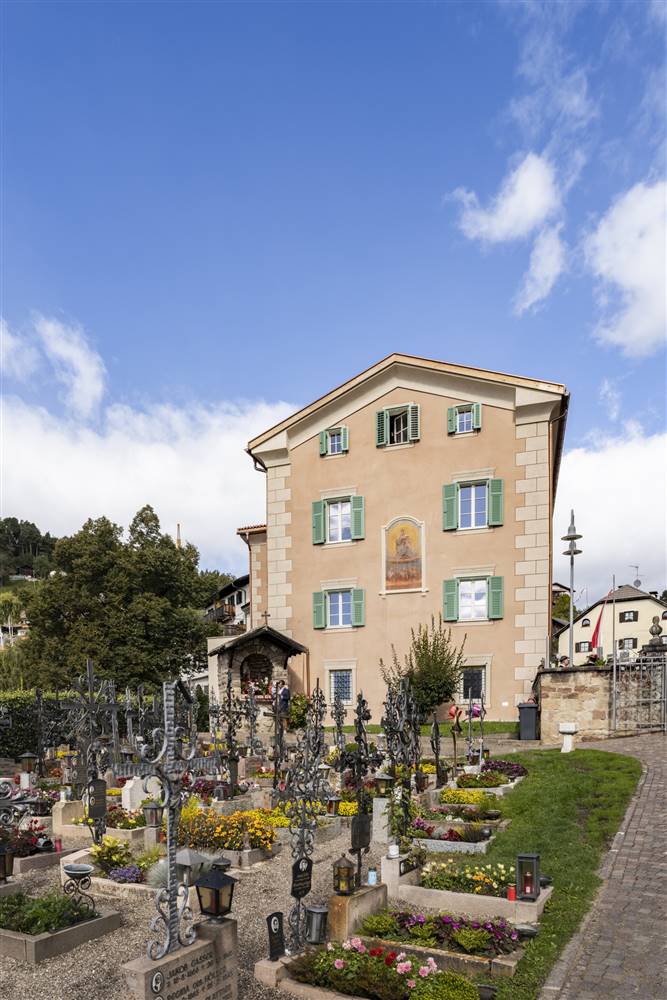
Widum, external view 1, ©ManuelMosquera
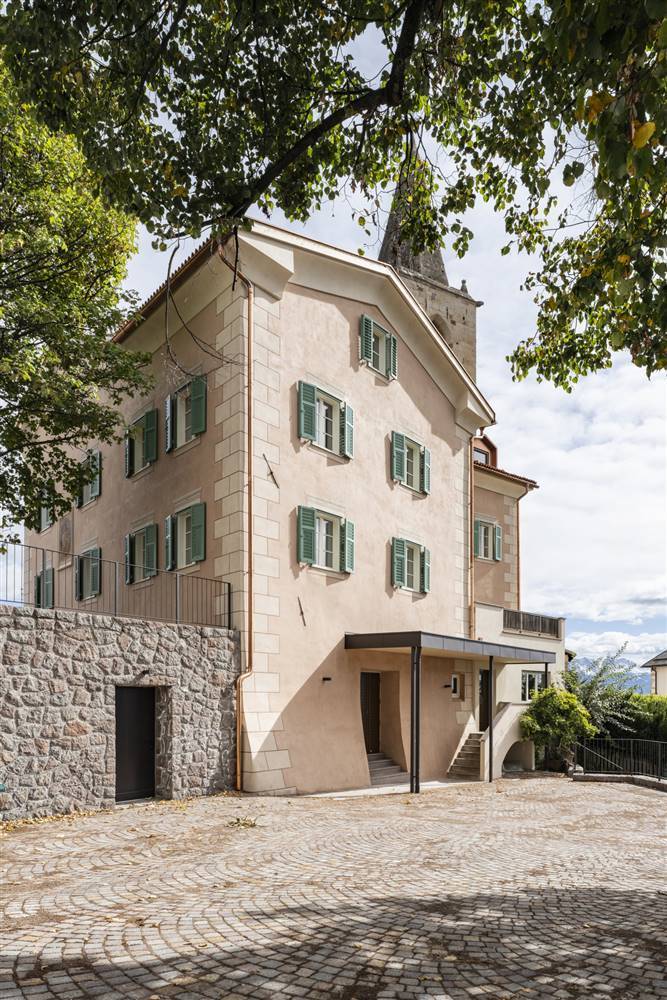
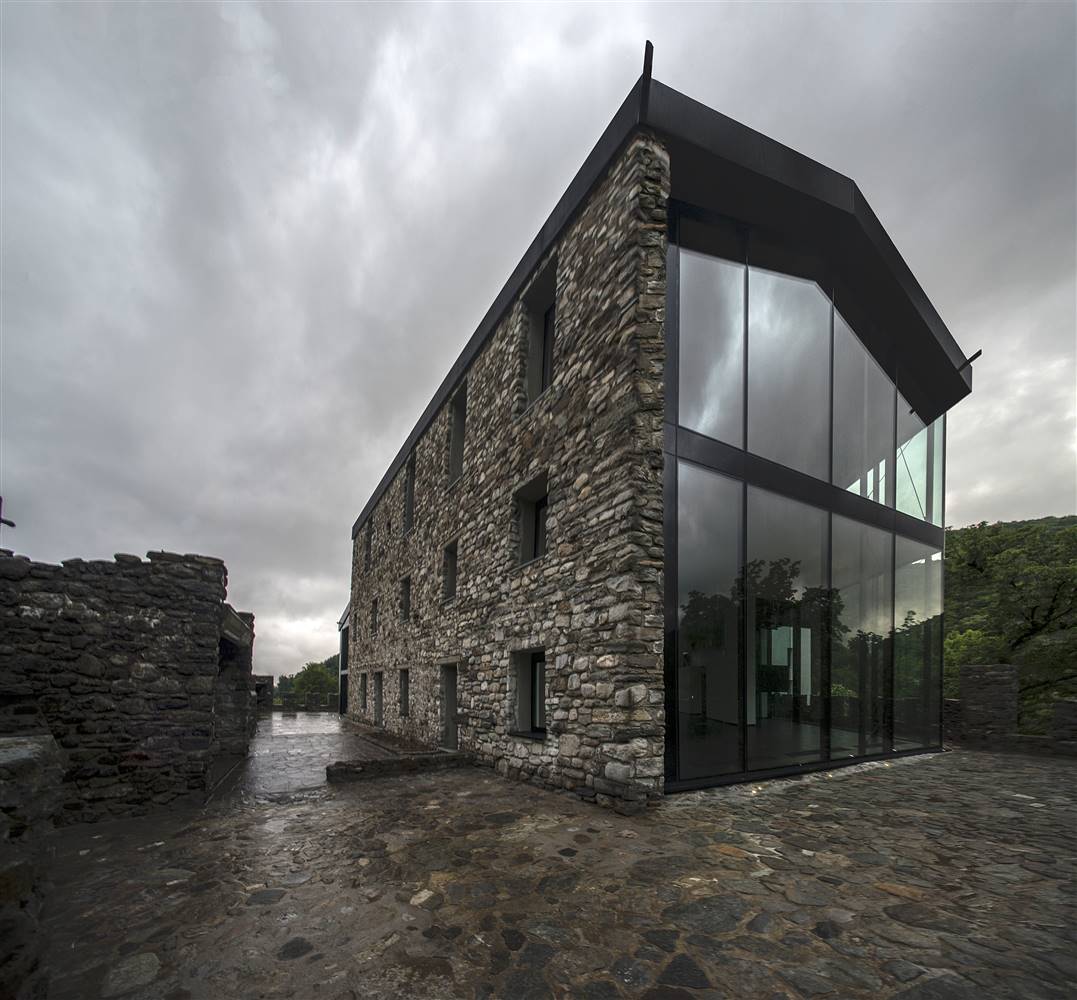
Widum, external view 2, ©ManuelMosquera
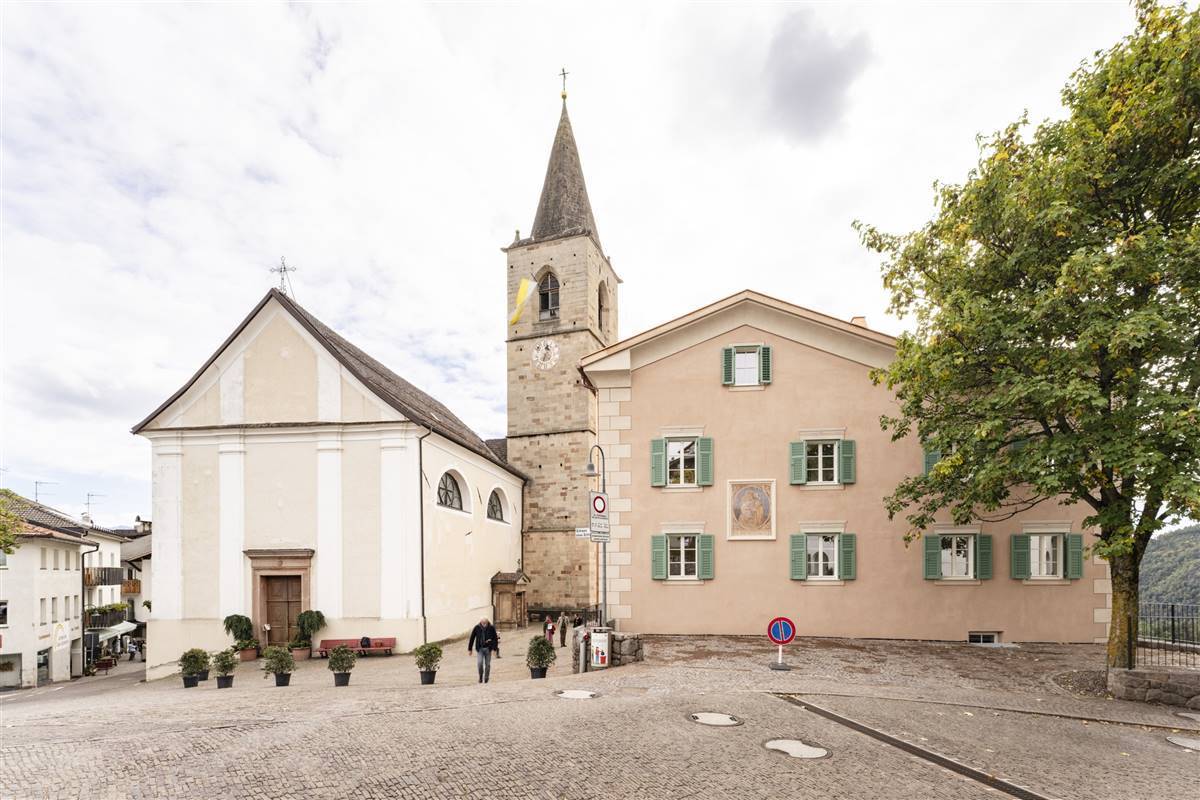
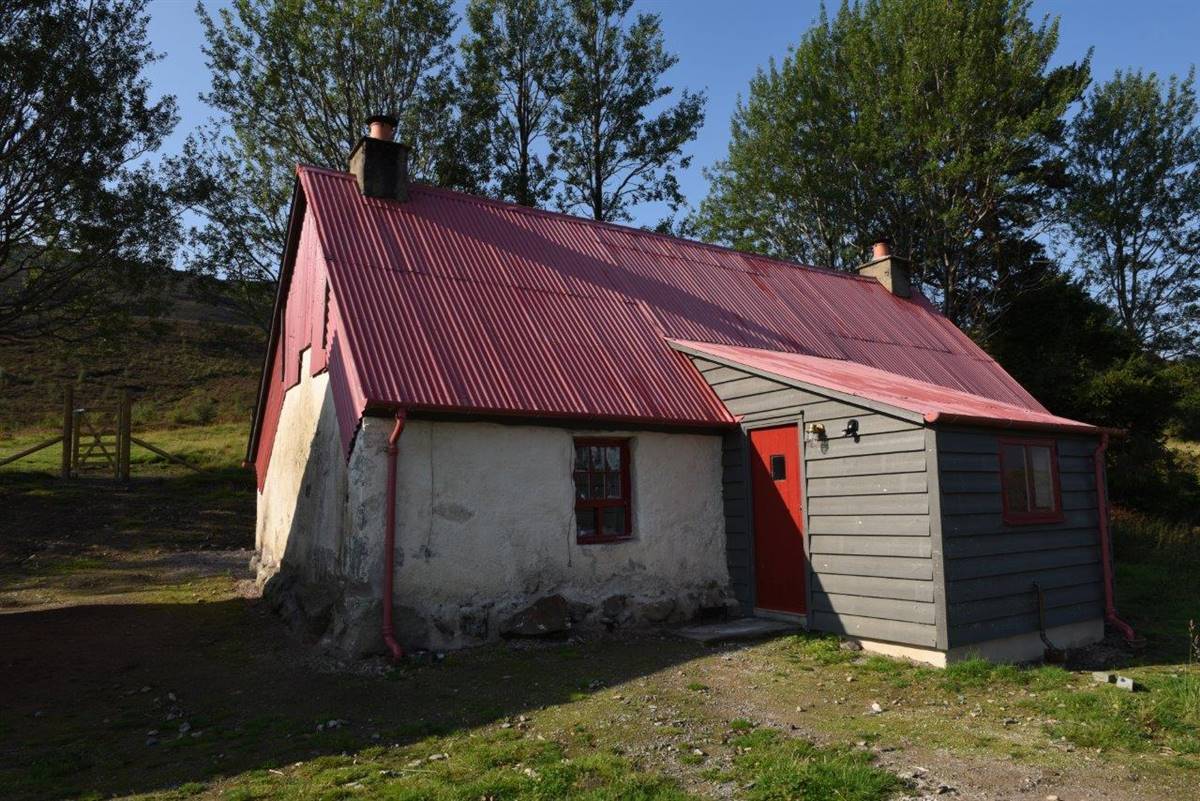
Widum, vista esterna 3, ©ManuelMosquera
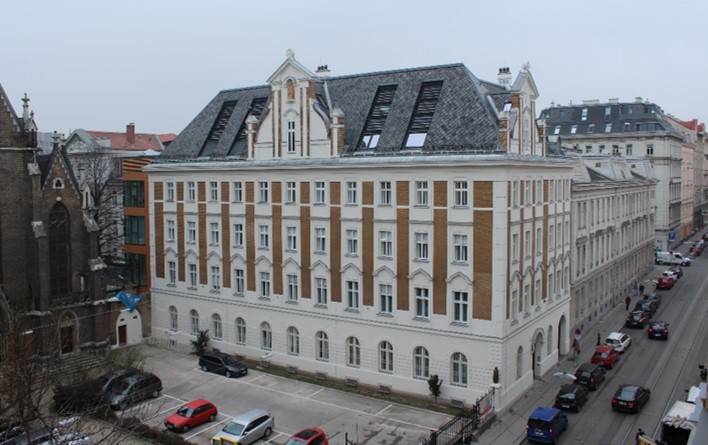
Widum, vista esterna 4, ©ManuelMosquera
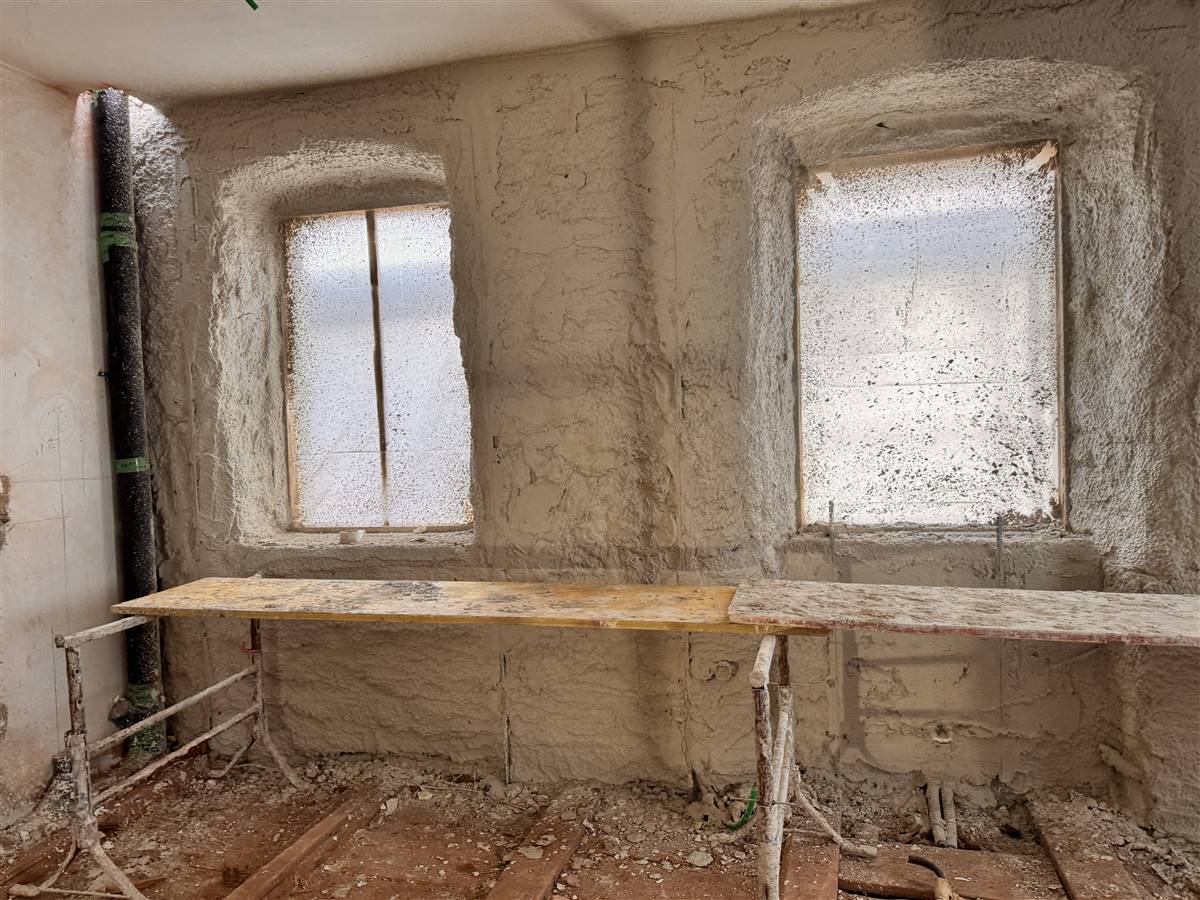
Pre-intervention, arch. Manuel benedikter

RENOVIERUNGS-PROZESS

Architektur

BESCHREIBUNG

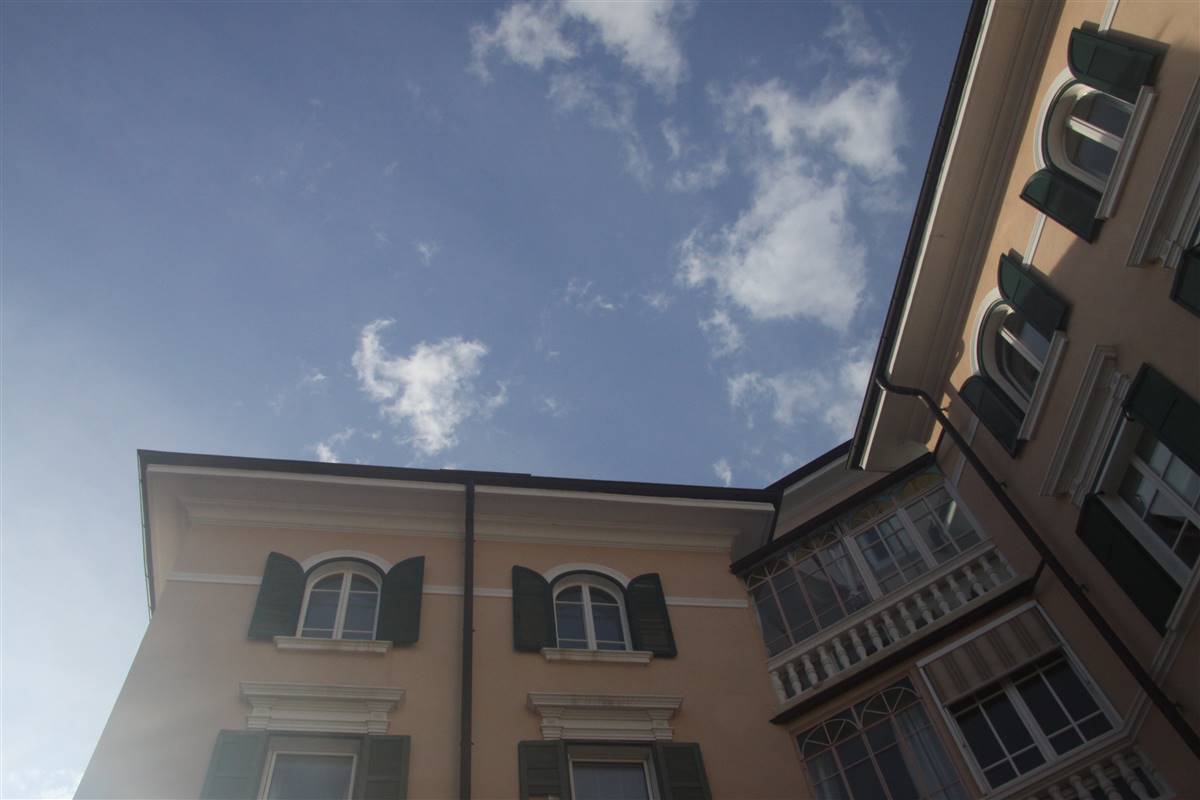
The building in this project is the historic Widum of San Genesio Atesino, protected under heritage conservation and originally constructed during the XVII century. The intervention involves the restoration of the facades and the internal restructuring aimed at adapting the property to contemporary residential needs while restoring its original historic and monumental character. Additions from the 1970s are removed to emphasize historic architectural features. Internally, the design reorganizes spaces to create residential apartments, preserving the central corridor typology and strategically placing an elevator to respect the original layout. Modifications include the addition of symmetrical dormers in the attic. Facade colours and decorative elements will be determined in consultation with heritage authorities based on historical investigation.

Erhaltungszustand

Erhaltungszustand der Gebäudehülle
Before the intervention, the building was in a generally deteriorated condition, with facades affected by incongruent alterations mainly dating back to the 1970s, resulting in a loss of clarity of the original architectural features. The interior spaces were functionally and technically outdated, no longer meeting contemporary residential standards. Although the historic typological layout was still recognizable, the internal organization offered limited functional adaptability, and building components and finishes required restoration, refurbishment, and upgrading works.

DENKMALWERT

ERHALTENSWERTE ELEMENTE
The building includes architectural and typological elements of historical and cultural significance that are worthy of preservation. In particular, the original volumetric and spatial layout, and the decorative architectural details characteristic of the construction period should be conserved. Furthermore, existing historic materials and finishes, as well as the central distribution layout, are considered essential features that define the building’s typological identity. These elements form an integral part of the property’s heritage value and provide a key reference for the restoration intervention.
Denkmalwert und wie er bestimmt wurde
The building has a high cultural significance as a representative example of late 19th-century historicist architecture within the Alpine context of South Tyrol. Its architectural value lies in the clear volumetric articulation, façade composition, and decorative details that convey a monumental character. From an aesthetic perspective, the building makes a substantial contribution to the spatial and visual quality of the historic center of San Genesio, acting as a local landmark. Its social value is connected to the historic function of the Widum as a community-related building, while its integration into the historic urban fabric strengthens its relationship with the surrounding architectural and landscape context.

Ziel der Sanierung

Renovation
The aim of the retrofit is to preserve and enhance the building’s historical and architectural value while adapting it to contemporary functional, technical, and energy requirements. The intervention seeks to improve energy performance and indoor comfort, reducing energy demand and emissions in compliance with heritage protection constraints. Additional objectives include the functional reorganization of interior spaces, improved accessibility, and increased building durability, ensuring that new technological solutions remain compatible with the existing historic fabric.
Gewonnen Erkenntnisse / besondere Erfahrungen
The retrofit highlighted the importance of an integrated heritage–energy approach, where energy efficiency measures must be carefully adapted to the constraints of a protected historic building. Key lessons include the need for early coordination between conservation authorities and energy design, the effectiveness of reversible and minimally invasive solutions (e.g. internal insulation strategies and upgraded building services), and the central role of accurate building geometry and thermal zoning in assessing energy performance. The project also demonstrated that significant comfort and efficiency improvements can be achieved without compromising architectural integrity, provided that material compatibility, moisture risks, and hygrothermal behavior are thoroughly evaluated from the early design stages.
Eingesetzte Software/Berechnungstools
Folgte die Sanierung einer spezifischen Methode? Nein
Energiebilanz Klimahaus
Hygrothermische Bewertung Glaser (Relazione ex L.10)

SANIERUNGS-LÖSUNGEN

Außenwände

Stone masonry

Stone masonry

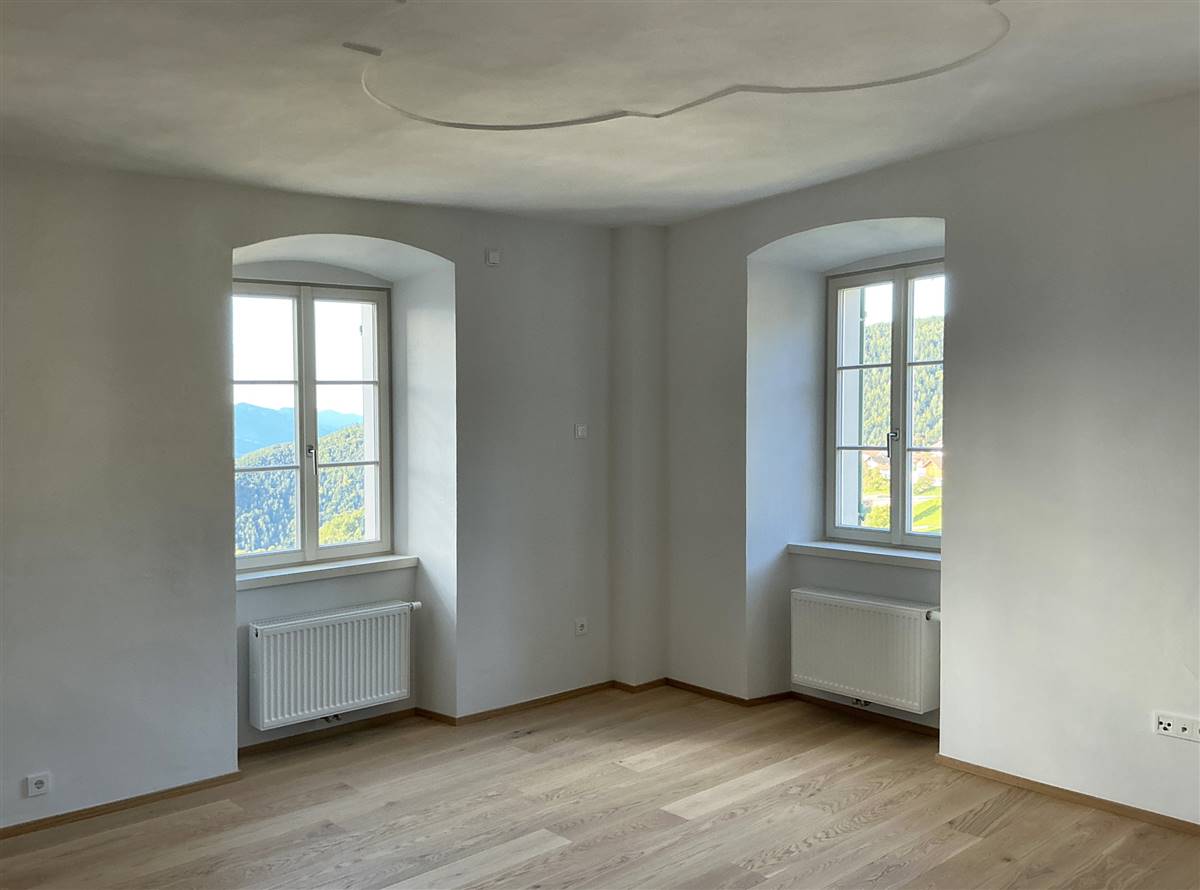
The intervention involved installing a variable-thickness internal insulating plaster based on perlite, applied to the stone masonry to improve thermal performance without altering the historic building’s exterior appearance. This solution reduced the wall U-value from 1.53 to 0.63 W/m²K while remaining compatible with conservation constraints.

The intervention is conservation-compatible because it is applied from the inside, avoiding any changes to façades and volume and preserving the building’s historic appearance. Moreover, using a mineral perlite-based insulating plaster is consistent with traditional substrates and supports a discreet, potentially reversible solution.
U-Wert (vor Sanierung) [W/m2K]: 1,53 W/m²K U-Wert (nach Sanierung) [W/m2K]: 0,63 W/m²K
Mehr Details
Aufbau Bestandswand
Plaster - Plaster:
50 mm
Stone - Stone Masonry:
600 mm
Plaster - Plaster:
50 mm
Aufbau sanierte Wand
Plaster :
50mm
Stone :
600 mm
Plaster - Perlite-based plaster:
60 mm


Fenster

Window

Window

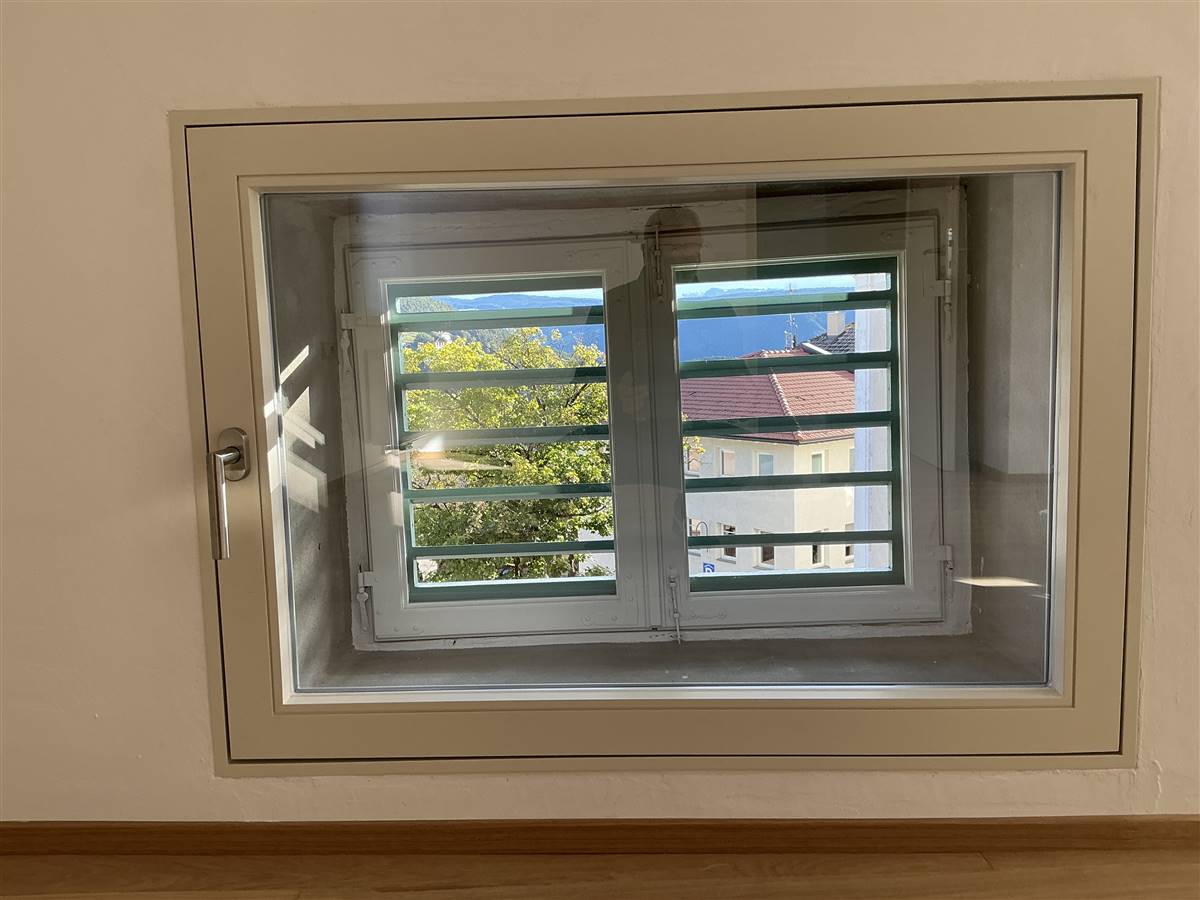
The original historic window was retained and integrated into a “double-layer” solution: traditional external shutters remain in place, while a secondary timber-framed inner window was added on the inside to improve performance without changing the exterior appearance.

The external shutters were replaced and redone in the same style, the original window was retained, and another internal window frame was added, featuring modern performance and a subtle look.
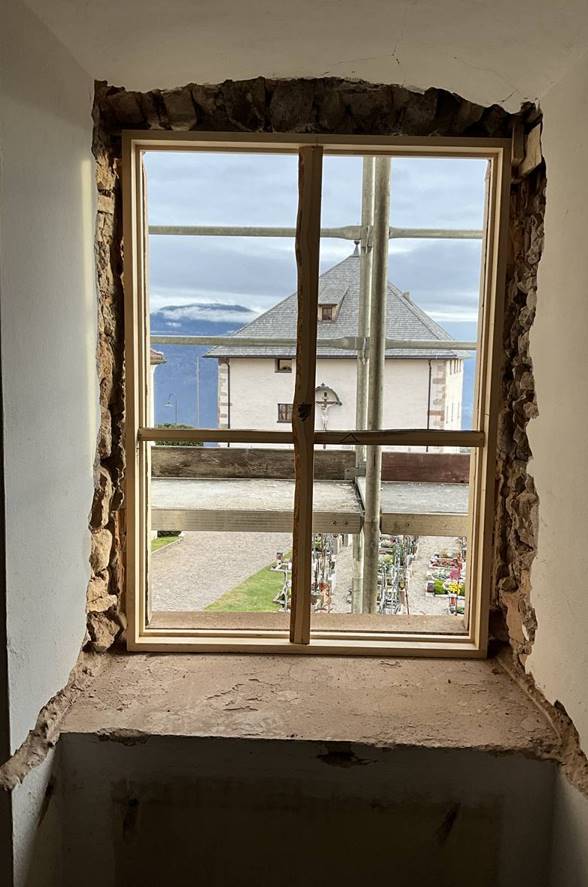
Bestandsfenster U-Wert Glas [W/m2K]: 3,0 Neues Fenster U-Wert Glas [W/m2K]: 1,0 Bestandsfenster U-Wert Rahmen [W/m2K]: 3,0 Neues Fenster U-Wert Rahmen [W/m2K]: 1,2
Mehr Details
Fenstertyp Bestand Double window
Verglasungsart Bestand Single
Verschattung Bestand Outer shutter
Ungefähres Einbaujahr 2021
Neuer Fenstertyp Casement window
Verglasungsart des neuen Fensters Double
Verschattung des neuen Fensters Outer shutter
Neuer Energiedurchlassgrad g [-] 0,05

Weitere Maßnahmen

DACH

ERDGESCHOSS

DACH

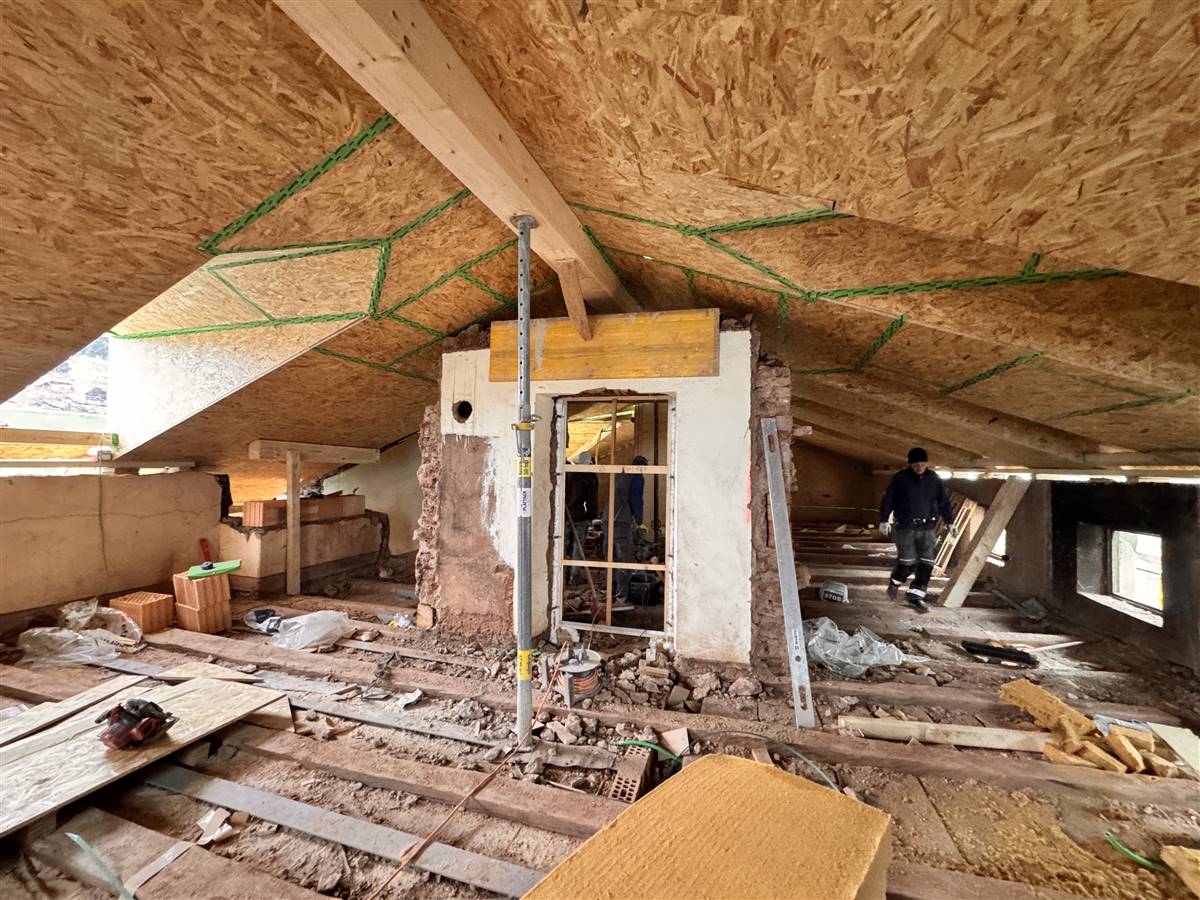
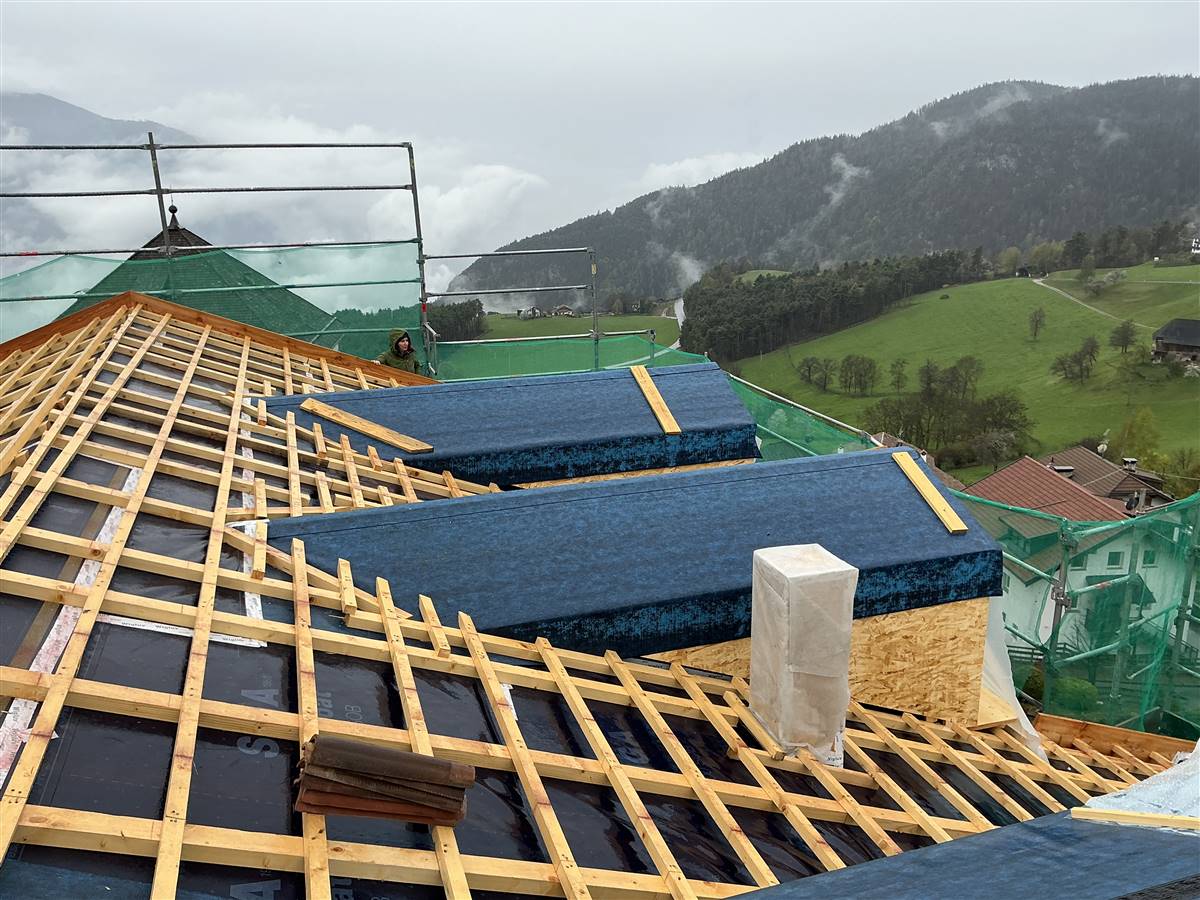
The roof was thermally insulated by installing 19 cm of wood fiber insulation panels, significantly improving the energy performance of the building envelope while ensuring breathability and compatibility with the existing structure.

The roof intervention involved a full reconstruction of the roof, while keeping the original geometry and volume unchanged. Although the materials and build-up were replaced, the solution remains conservation-compatible because it does not alter façades or the roof silhouette and does not change the building’s external appearance; performance is upgraded while preserving architectural identity and the relationship with the historic context.

U-Wert (vor Sanierung) [W/m2K] 1,34 U-Wert (nach Sanierung) [W/m2K] 0,23
Mehr Details
Aufbau Bestandsdach
Plaster - Plaster:
20 mm
Wood - Wood:
25 mm
Air gap - Air gap:
200 mm
Wood - Wood:
25 mm
Concrete - Concrete:
60 mm
Aufbau saniertes Dach
Other - Gypsum board:
12 mm
Wood paneling - OSB:
18 mm
Insulation - Woodfiber:
160 mm
Wood paneling - Wood panel:
35 mm
ERDGESCHOSS

Before the intervention, the ground-contact floor slab featured an insulating layer consisting of a 12 cm thick XPS (extruded polystyrene) panel, placed beneath the structural slab. The existing configuration provided a level of thermal insulation that was not fully optimized with respect to current energy efficiency requirements.

The intervention is compatible with building conservation requirements, as it does not alter load-bearing structures nor introduce visible changes to the existing architectural elements.
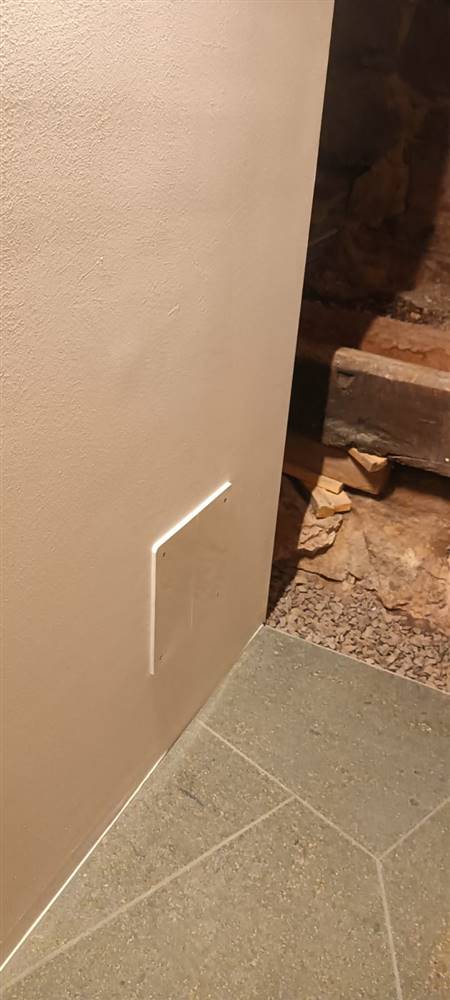
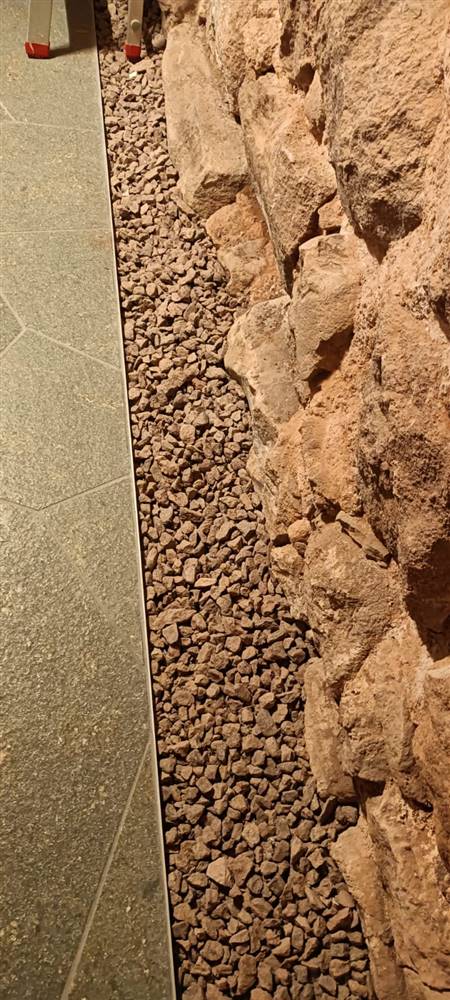
U-Wert (vor Sanierung) [W/m2K] 2,64 U-Wert (nach Sanierung) [W/m2K] 0,25
Mehr Details
Aufbau Boden/Kellerdecke im Bestand
Concrete slab - Lightweight concrete:
200 mm
Concrete slab - Concrete:
60 mm
Finish - Tiles+Adhesive:
20 mm
Aufbau Boden/Kellerdecke nach Sanierung
Other - Gravel:
80 mm
Insulation - XPS:
120 mm
Insulation - EPS:
10 mm
Concrete slab - Concrete:
50 mm
Finish - Tiles+Adesive:
15 mm

HVAC

HEIZUNG

BRAUCHWARMWASSER

HEIZUNG

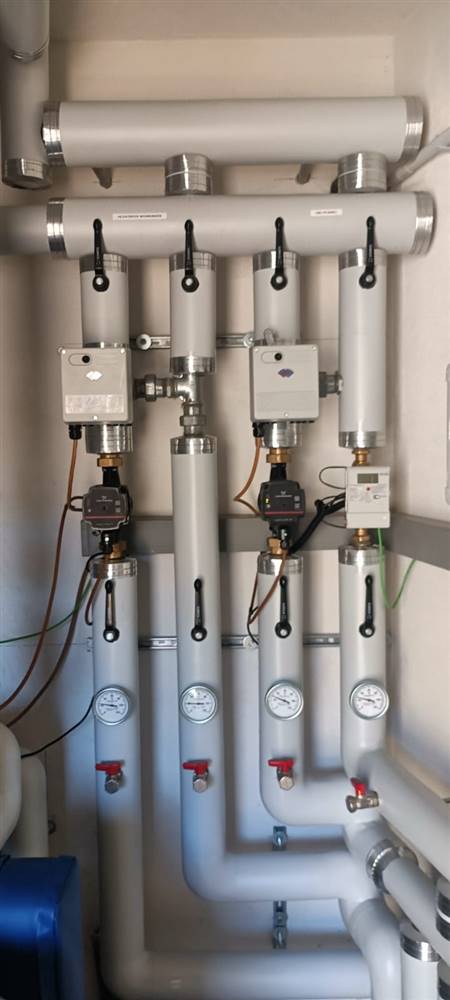
As part of the building energy renovation, the heating system was converted to district heating, allowing the building to be integrated into a centralized heat production and distribution network.

All technical systems are located in a semi-basement technical room, with no interference with architectural elements and no impact on the building’s aesthetic appearance.
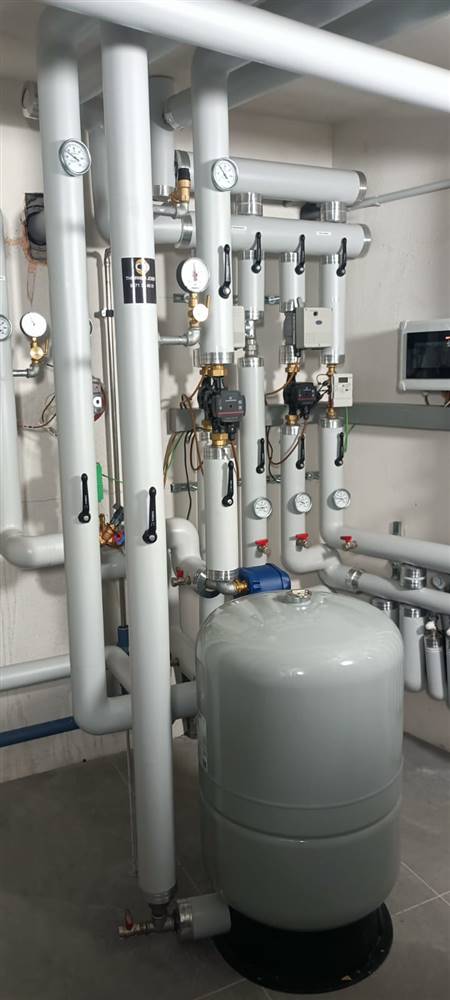
Mehr Details
Heizungssystem nach Sanierung
Art der Heizung District Heating
Brennstoff District Heating
Wärmeverteilung Radiators
Nennleistung 40 kW
BRAUCHWARMWASSER

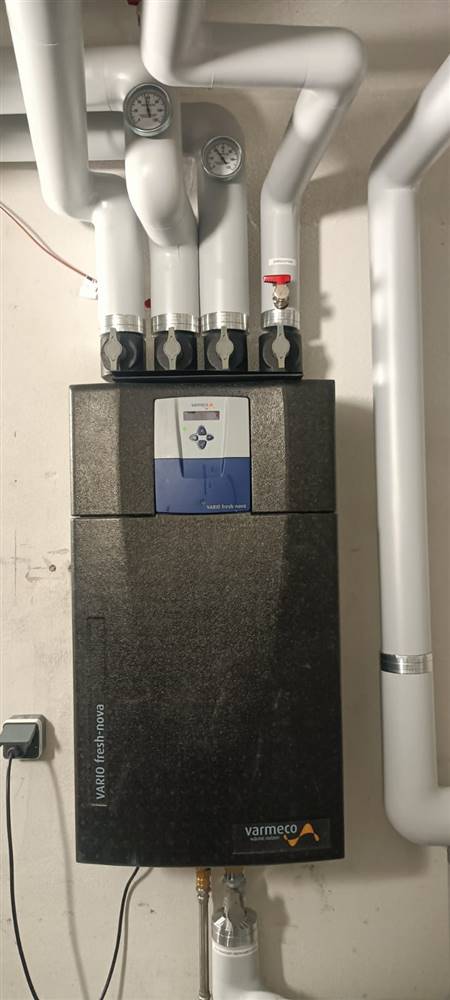
As part of the building energy renovation, the heating system was converted to district heating, allowing the building to be integrated into a centralized heat production and distribution network.

All technical systems are located in a semi-basement technical room, with no interference with architectural elements and no impact on the building’s aesthetic appearance.
Mehr Details
Brauchwarmwasserbereitung nach Sanierung
Typ District Heating
Brauchwasserspeicher Nein
Wärmerückgewinnung aus Brauchwasser Nein

Energieeffizienz

Energieeffizienz
Energieausweis Klimahaus
Freiwillige Zertifikate Nein
Energievrabrauch
Heizung
Primärenergie 73 kWh/m2.y

Primärenergie
Berechnungsmethode CasaClima
Energieverbrauch incl Brauchwarmwasser Nein
Energieverbrauch nach Sanierung 73 kWh/m2.y

Kosten

Finanzielle Aspekte

approx. 1.800.000 euro

Investitionskosten
Total investment costs
€ (total)
Betriebskosten
Lifecycle cost
Nein

Leider wurde noch kein freigegebenes Projekt gefunden